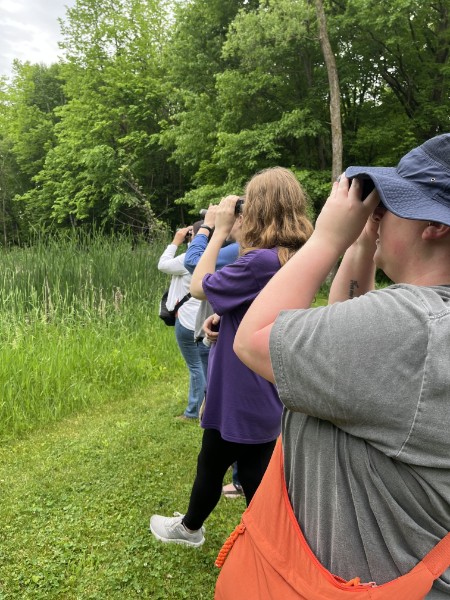
led by Jim Millard from CMAS with assistance from: Herb Dingmann, Jean Johnson, Kyle Woitalla on 25 April, 16 / 23 / 30 May, 2026
Spring migration brings the largest variety of breeding plumage birds. As we move into late spring / early summer, migrants have moved on and resident breeding populations have paired off for the nesting period. Identification becomes more difficult as foliage often obscures birds visually and behavior changes with the rearing of young.
[photo credit: Jean Johnson]
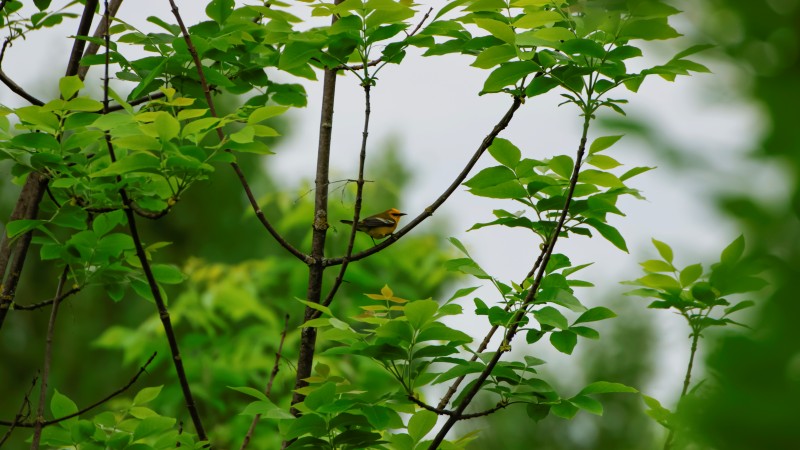
Birders were guided over a 2-hour walk through a portion of the 65 acres at the Folk School, primarily along trail loops A and B, extending up to the NW corner of the Folk School. Many different environments are encountered throughout, starting with the Workshop area and clearing extending through the deciduous woods passing the Sugar Shack, crossing the Spunk Creek and up to the NW corner where the Barred Owl likes to hang out. We did not have the fortune to see the owl this year, but he did call to us on several occasions [“who cooks for you, who cooks for you – all”]. Continuing to the NW, there is a ridge with a long cleared area in the woods ideal for various flycatchers including the Least, Great-crested and Olive-sided. Back down to the creek and across the bridge to the S, we come to the prairie at the SW corner of the property after the marsh – where we got a surprise view of this little guy:
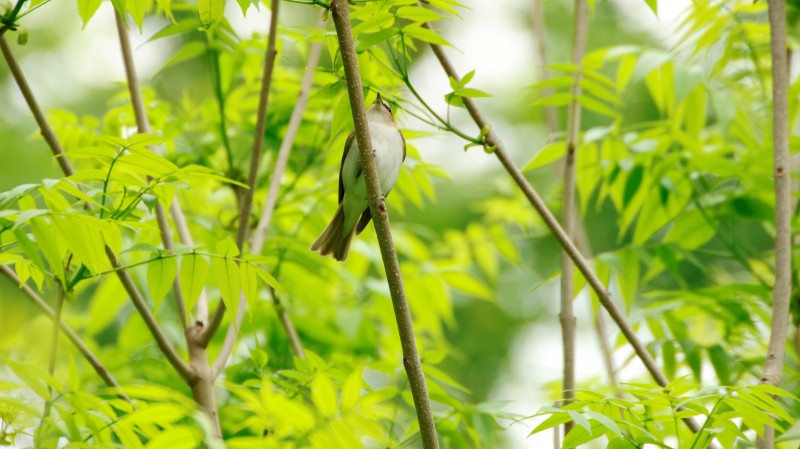
Students were guided through many of these natural areas at Avon Hills Folk School, and got an intro to bird identification, habitat and activity. Bird ID was via visual and audible means.
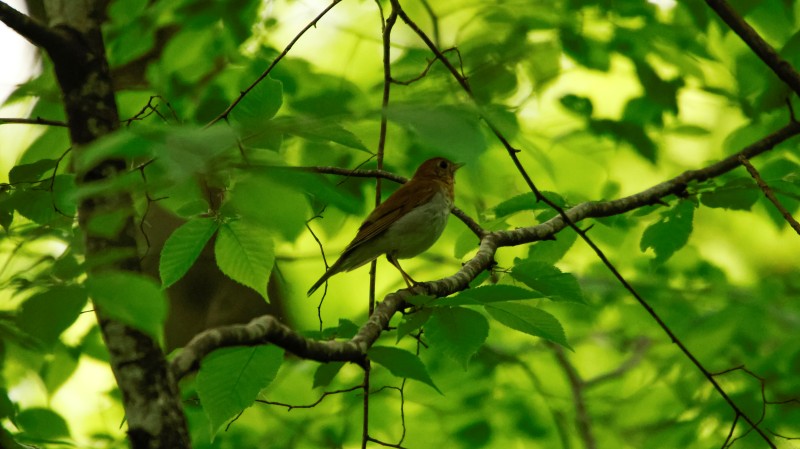
Highlights:
– both Black-billed and Yellow-billed Cuckoo [different weekends]
– Blue-winged Warbler on our last weekend
– 76 total different species for the 4 spring 2026 bird walks.
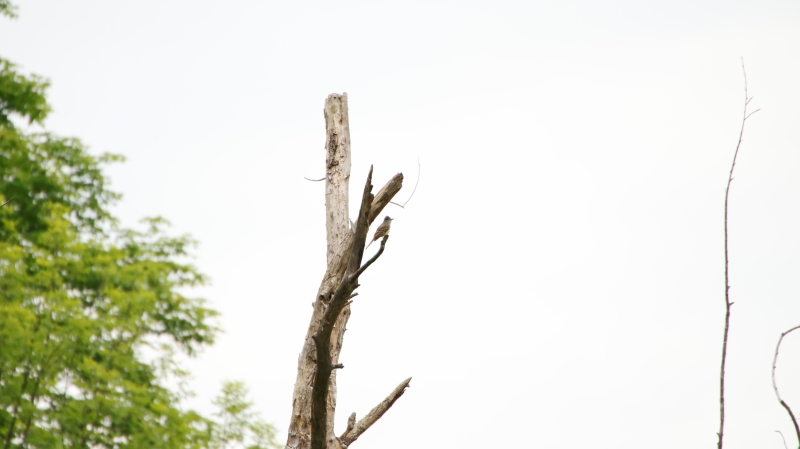
This was the 3rd year we have held this class and intend to continue into the future. I always enjoy leading the class and have found the students’ enthusiasm and questions inspire my continued learning of our avian friends.